What You Need to Consider When Choosing Between a Petrol or Hybrid Vehicle
You’re sitting in gridlock, watching the fuel gauge tick down. In a standard car, that money simply evaporates. Buying a vehicle is a major financial commitment, and today, the critical debate centres on petrol vs hybrid vehicles. While a traditional car relies entirely on petrol, a hybrid pairs that engine with an electric helper to share the workload.
According to automotive data, your daily commute dictates which option saves money. Stop-start traffic makes hybrids profitable thanks to regenerative braking, a system capturing energy usually lost when slowing down and storing it for later. Seamlessly swapping between these energy sources gives hybrids their efficiency edge.
Stop-Start vs. Open Road: Why Your Commute Dictates Your Engine Choice
Does your daily route involve endless red lights or wide-open roads? To save fuel in traffic, hybrids use an energy recovery cycle. Think of the hybrid battery as a backpack that catches energy normally lost when you step on the brakes. These regenerative braking benefits mean the car powers itself during the most fuel-hungry parts of your drive, like accelerating from a dead stop.
Matching your daily commute to the right technology dictates your actual savings. Consider these three environments when choosing the best engine type for city driving versus the motorway:
- Heavy city traffic: Hybrids thrive here, constantly refilling their battery every time you brake.
- Mixed suburban driving: Hybrids easily edge out petrol engines by assisting during frequent speed changes.
- Constant motorway cruising: Petrol engines run highly efficiently at steady speeds, while a hybrid’s electric motor sits mostly idle.

Long road trips change the equation entirely. At a steady seventy miles per hour, there is little braking to refill that battery backpack. This makes you wonder: are hybrid cars worth it for high-mileage drivers? If you rarely face gridlock, a standard petrol engine often makes more sense.
The ‘Sticker Price’ vs. The ‘Pump Price’: Calculating Your True Payback Period
Buying a car balances upfront costs against monthly budgets. Dealership hybrids usually carry a “price premium”, costing slightly more to purchase than their standard engine counterparts. However, a closer fuel economy comparison shows average drivers can quickly shrink their monthly fuel budget, offsetting that initial sting at the petrol pump.
To find exactly when those daily pump savings erase the initial sticker shock, you need to find your break-even point. Follow these four steps to calculate your hybrid payback period:
- Identify the premium: Subtract the standard petrol model’s price from the hybrid version’s price.
- Calculate fuel costs: Estimate yearly petrol spending for both cars using local fuel prices and their estimated kilometers per litre (KPL).
- Determine annual savings: Subtract the hybrid’s yearly fuel cost from the petrol model’s cost.
- Divide and conquer: Divide the price premium by your annual savings to reveal the exact number of years required to break even.
Maths aside, buyers must also weigh the performance differences between turbo petrol vs hybrid vehicles. Turbo petrol engines often provide punchier motorway acceleration, whereas hybrids offer smoother, quieter city driving. Once your break-even timeline is clear, you can confidently choose an engine; provided unexpected repairs don’t ruin the equation.
Maintenance Realities: Will a Battery Replacement Wipe Out Your Savings?
Many buyers worry that comparing an internal combustion engine to a petrol-electric powertrain automatically means bracing for massive repair bills. The daily reality is surprisingly the opposite. Because the electric motor helps slow the car down, capturing energy in the process, your physical brake pads experience far less friction. This means routine wear-and-tear components often last significantly longer in a hybrid, keeping your typical service visits cheap and familiar.
That nagging fear of a dead battery erasing your savings is understandable, but automakers provide a massive safety net. Modern warranty cycles usually cover hybrid batteries for eight to ten years or 100,000 miles. By the time hybrid battery replacement costs become a genuine, out-of-pocket concern, most owners have already moved on to their next vehicle.
Looking down the road, this combination of reduced component wear and guaranteed battery health pays major dividends. An active warranty reliably boosts your hybrid car’s resale value after five years compared to aging traditional cars. Knowing your maintenance budget is secure helps clarify the financial picture, but it must also align with your lifestyle.
The Lifestyle Fit: Solving Range Anxiety and Choosing Your Hybrid Type
You might hesitate to embrace new technology if you picture yourself stranded without power. Fortunately, solving range anxiety with full hybrid vehicles is effortless, the standard engine automatically recharges the battery as you drive, so you simply fill it up at a petrol station like normal. However, when comparing a self-charging hybrid, a plug-in hybrid, and a standard petrol car, your housing situation dictates the real winner. Both hybrid options usually unlock annual tax savings for low-emission vehicles, but maximising those financial perks means matching the technology to your driveway.
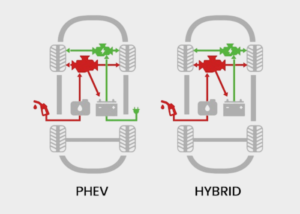
To find your perfect fit, consider where you park every night:
- Self-Charging (HEV): Best for flat dwellers or street parkers.
- Pro: Zero change to your fuelling routine.
- Con: Cannot run purely on electricity for long distances.
- Plug-In (PHEV): Ideal for homes with accessible outlets.
- Pro: Handles short daily commutes completely petrol-free.
- Con: Higher upfront cost and requires strict nightly charging.
Your Final Decision Checklist
A thorough value check clarifies exactly what you need to consider when choosing between a petrol vs hybrid vehicles. If your routine involves years of heavy motorway driving, a traditional engine often wins. Conversely, years of stop-start city commuting strongly favours hybrids. Before buying, verify the exact insurance premiums for both options, and ensure the lifecycle carbon footprint aligns with your personal sustainability goals.
The most crucial step is a strategic test drive. Take both options on routes mimicking your actual commute, comparing how they feel in heavy city traffic versus open motorway speeds. You are then completely ready to make a confident, cost-effective choice for your driveway.
Tuesday, 05th May, 2026