How Much Can a Hybrid Vehicle Actually Save You Annually in Australia?
How Much Can a Hybrid Vehicle Actually Save You Annually in Australia?
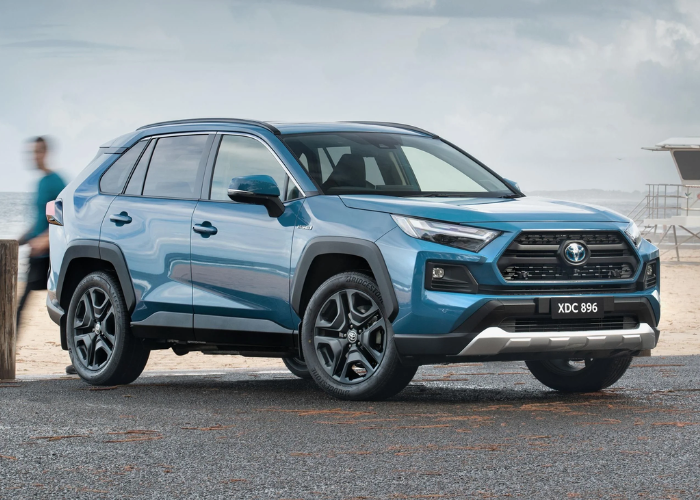
Watching the bowser tick past $2.00 a litre has become a painfully familiar routine for Australian families. According to national fuel data, this constant budget drain is driving a massive shift toward fuel-efficient vehicles. Before paying extra at the dealership for that new Toyota RAV4 or Corolla, you are likely wondering exactly how much a hybrid vehicle actually saves you annually in Australia.
Real hybrid car savings start with understanding the technology. Unlike plug-in hybrids that require a wall socket, traditional “self-charging” models automatically capture energy while you brake, demanding absolutely zero changes to your daily routine. Industry figures show this seamless system not only slashes petrol costs by reducing servo visits, but also protects your wallet through cheaper maintenance and exceptional resale value.
Cracking the ‘L/100km’ Code: Turning Lab Results Into Real Aussie Dollars
Car dealerships love throwing the “L/100km” metric around, but let’s translate that into fuel tank frequency. If a standard petrol SUV uses 8.0L/100km, you might visit the petrol station every ten days. Drop that to 4.5L/100km in a hybrid, and you are suddenly only filling up once every three weeks.
That frustrating suburban school run is exactly where this technology shines. In stop-start traffic, the electric motor takes over the heavy lifting, allowing your petrol engine to stay switched off while you inch forward. This explains the city vs highway hybrid fuel efficiency Australia difference; unlike traditional cars, hybrids actually save you the most money in congested urban environments.
Running a realistic hybrid vs petrol fuel cost comparison Australia highlights these real-world dollars. Driving the national average of 15,000km yearly with fuel hovering around $2.00 a litre, a standard SUV costs roughly $2,400 annually. The impact of Australian fuel prices on hybrid savings means the hybrid equivalent slashes that petrol bill to just $1,350.
Those extra thousand dollars sound fantastic, but you still have to pay an upfront premium to drive the vehicle off the lot. Determining if this “Hybrid Premium” is a smart investment requires calculating your break-even point.
Is the ‘Hybrid Premium’ a Smart Investment? Calculating Your Break-Even Point
Walking into a dealership, that shiny “Hybrid” badge usually carries a higher price tag. For popular family haulers like the Toyota RAV4 or Hyundai Kona, expect to pay a $2,500 to $4,000 premium over the standard petrol version. Naturally, everyday buyers immediately ask: is the hybrid price premium worth it? The answer entirely depends on your routine.
Figuring out exactly how long to break even on a hybrid car Australia style doesn’t require a finance degree. You can build your own mental hybrid car savings calculator by following three simple steps:
- Identify the upfront price difference between the two models (e.g., $3,000).
- Calculate your estimated annual fuel savings based on your driving (e.g., $1,050).
- Divide the extra cost by those yearly savings to find your “Years to Profit” (in this scenario, roughly 2.8 years).
If your daily drive involves the stop-start crawl of a city commute, you will hit that break-even point incredibly fast. Once you cross that mark, every fuel dollar saved stays in your pocket. However, fuel isn’t the only long-term financial benefit. Maintenance and resale value serve as significant secondary financial advantages.
The Stealth Savings: Why Maintenance and Resale Value are Your Secret Weapons
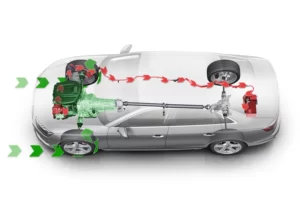
Beyond fuel savings, many worry that an extra electric motor means double the repair bills. Surprisingly, the opposite is true thanks to regenerative braking. Instead of relying purely on physical brake pads to stop, the vehicle uses the electric motor to slow down, capturing that momentum to recharge the battery. This delivers brilliant regenerative braking benefits for urban fuel economy and saves massive wear on your brake components. Consequently, the average annual maintenance costs of hybrid car Australia drivers pay are often lower than traditional petrol models.
 Addressing the fear of failing batteries is equally critical. Today, most major brands offer up to 10-year battery warranties in Australia if you simply follow standard logbook servicing. Because of this built-in protection, hybrid car resale value trends Australia wide remain incredibly strong. When you eventually upgrade, a well-maintained used hybrid will consistently command top dollar on the second-hand market compared to standard petrol equivalents.
Securing these stealthy maintenance and depreciation wins already makes great financial sense for everyday families. Beyond the mechanic’s garage, government incentives offer additional avenues to maximize your budget.
Navigating Aussie Incentives: Tax Perks and Luxury Car Tax Thresholds
Beyond the mechanic’s shop, the government actually rewards you for driving greener. Through Australian government incentives for hybrid vehicles, you can unlock discounts before even turning the key. If you lease through work, the fringe benefits tax exemptions for hybrids Australia provides can save thousands annually on eligible plug-in models. Furthermore, many states offer cheaper stamp duty or discounted annual registration.
Looking at a premium family SUV? The tax office encourages these choices by raising the luxury car tax thresholds for fuel efficient vehicles Australia uses. Because hybrids consume under 7.0L/100km, they dodge this hefty 33% tax up to a higher price point:
- Fuel-efficient vehicles (Hybrids): $91,387 limit
- Other vehicles (Standard petrol): $76,950 limit
With these perks padding your wallet, you can clearly map out your transition.
Your 5-Year Financial Roadmap: Should You Make the Switch Today?
You can now look past the sticker price and clearly evaluate the total cost of ownership hybrid vs ICE Australia. While city commuters will quickly recoup the initial premium in stop-start traffic, long-haul rural drivers face a slower return on investment.
To take the next practical step, start tracking your current weekly kilometres. Once you know your baseline, test drive a model along your usual route. If you have a driveway, try comparing hybrid vs plug-in hybrid running costs to maximize your savings, eventually turning those skipped servo trips directly into extra cash for your holiday fund.
Tuesday, 12th May, 2026