How To Choose The Right Welcab For You

Finding the right mobility vehicle can feel a little overwhelming at first. On one hand, there are more accessibility options available than ever before. On the other hand, when you start looking at the details, it can suddenly feel like there isn’t enough versatility.
Choosing a wheelchair accessible vehicle isn’t just about the vehicle itself. It’s about how that vehicle fits into everyday life. Things like comfort, ease of entry, vehicle features and long-term usability all matter just as much as the badge on the front.
So where do you start?
Start With Your Needs
The first step is always understanding how the vehicle will actually be used.
Some people need a rear-entry wheelchair ramp so a wheelchair can roll straight into the vehicle. Others might benefit more from a swivel or lift-up passenger seat that makes movement easier without needing to remain in the wheelchair during travel.
Then there are vehicles with powered lifts, which can raise a wheelchair into the vehicle with minimal effort. These can be particularly useful for heavier chairs or situations where lifting a manual ramp might not be practical.
Inside the vehicle, there are also practical considerations like wheelchair restraints, headroom and legroom. Some models are designed to allow the wheelchair user to travel comfortably inside the vehicle, while others focus more on making entry and exit easier for passengers who can transfer into a seat.
None of these options are universally “better” than the others. They just suit different situations.
Vehicle Size Matters More Than You Think
The size of the vehicle often determines what features are available.
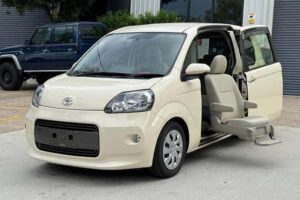
Smaller mobility vehicles can be incredibly practical for everyday driving. They’re easier to park, simpler to navigate through tight streets, blend in with traffic and generally feel more like a regular passenger car. Models like the Toyota Porte and Toyota Spade are good examples of this style. They typically use wide, sliding doors and swivel seats to make entry and exit easier without dramatically changing the overall vehicle footprint.
Then you move into the mid-size people mover category, which is where vehicles like the Toyota Noah and Toyota Voxy sit. These are some of the most popular Welcab models because they strike a nice balance between space and drivability. With these vehicles, you’ll often find rear-entry ramps and wheelchair restraint systems that allow a passenger to remain in their chair during travel.
For those needing additional passenger space or greater flexibility, larger vehicles like the Toyota HiAce, Toyota Alphard, or Nissan Elgrand come into the conversation

. These models can offer significantly more interior room, making them well suited for larger wheelchairs, multiple passengers, or longer trips where comfort becomes more important.
It really depends on how the vehicle will be used day to day.
Factory Welcab vs Vehicle Conversions
This is another decision that tends to come up early in the research process.
A factory Welcab is a vehicle that was designed and built with accessibility features as part of the original manufacturing process. That means the ramps, seating systems, lifts, restraints and more are integrated directly into the vehicle’s design. Since these features are engineered from the start, they often feel very natural to use. The vehicle structure and safety systems are all designed to work with those accessibility features already in place.
Vehicle conversions, on the other hand, involve modifying an existing vehicle after it has been produced. These can still be very effective and there are some excellent conversion specialists out there, but the experience can vary depending on how the conversion was carried out. The benefit of a conversion is you get to choose the vehicle that will have these changes, giving you a wider range of choice and converting exactly the features you need. Also a vehicle conversion can be covered by the NDIS, if the guidelines are followed.
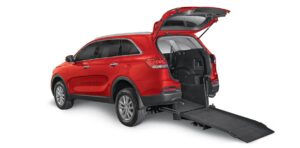
For some people, a factory-built wheelchair accessible vehicle provides extra peace of mind. Others may find that a conversion offers flexibility that better suits their needs.
There isn’t one right answer here, it’s simply about what works best for the situation.
The cars have other features too
It’s also easy to forget that a Welcab is still a car at the end of the day. While the accessibility features are incredibly important, the regular vehicle features matter just as much for everyday driving. Things like fuel economy, reversing cameras, parking sensors, sliding doors, air conditioning, audio systems and more, can all make a big difference to the overall experience. If you’re going to be using the vehicle regularly, it should still feel comfortable and enjoyable to drive.
Sometimes the small things like easier parking or phone connectivity, end up being just as important as the accessibility equipment itself. Choosing a vehicle that ticks all the boxes can make all the difference to your love for the car.
Photos and Research Can Only Go So Far
One of the most common things people say after buying a mobility vehicle is that the experience felt completely different once they saw the vehicle in person.
Reading specifications and looking at photos online is helpful, but it doesn’t always show the full picture. The angle of a ramp, the space inside the cabin or how easy a seat is to operate, can be difficult to judge without actually trying it. Sitting inside the vehicle, loading a wheelchair or testing a swivel seat often gives a much clearer understanding of whether a vehicle will work long term.
Buying a Welcab is rarely an impulse decision.
It helps to read reviews, watch videos, and talk to people who have experience with these vehicles. Owners, carers, mobility specialists or even dealers can often provide insights that don’t show up on spec sheets.
The key is understanding what matters most for your specific situation.
Finding the Right Fit
At the end of the day, choosing a Welcab isn’t about finding the “best” vehicle. It’s about finding the vehicle that fits your lifestyle and your passengers best. The right mobility vehicle should make everyday travel easier. And sometimes, the best way to figure that out is simply by taking the time to explore the options and seeing what feels right in person.
Tuesday, 07th April, 2026